We are always interested in the events we find around Alaska, whether that is a summer solstice festival or an Indigenous cultural celebration. Here is a fun one we wanted to share.
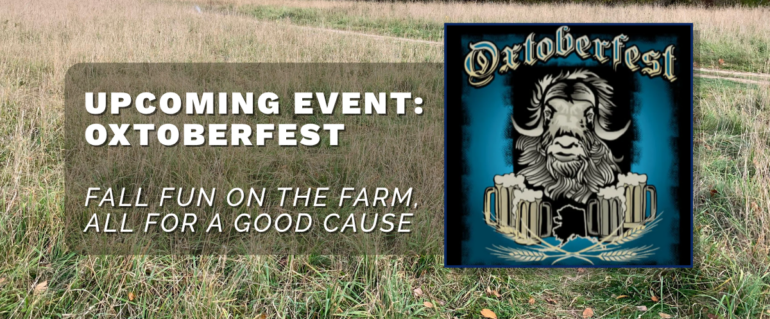
On Saturday, October 3, the Musk Ox Farm in Palmer, Alaska, throws a party in a pasture. It all happens outdoors, with the Talkeetna Mountains on one horizon and the Chugach on the other. Seventy-seven musk oxen watch from their side of the fence. It's called Oxtoberfest. This is the farm's single biggest fundraiser, and every year so far it has sold out, so it's a good idea to grab tickets before the rest of the herd does. Held since 2015, it's an Alaskan version of a Bavarian original. The potatoes, cabbage in the sauerkraut, brats, pretzels, and beer all come from Alaska growers and makers.
Music for the event comes courtesy of traditional Bavarian-music band Alaska Blaskapelle. The 12-player, all-brass band wears lederhosen and is billed by the farm as the best oompah band this side of Munich. Dance the night away to polkas, waltzes, several rounds of “Ein Prosit,” the toasting song that gets everyone on their feet, and at least one chicken dance, if you know, you know. This is one night a year when the oxen get to watch humans let loose and have some fun.
Oxtoberfest Tickets and Event Details
Tickets are now availabull, with General Admission and VIP tier tickets available. Prices, what each tier includes, and the ticket link are all at muskoxfarm.org/oxtoberfest.
Oxtoberfest takes place from 5 to 10 p.m. and goes ahead in rain, snow, or whatever else turns up. There is no single-use plastic at the event, so bring a reusable pint glass or stein, or buy a commemorative one.
Who Your Ticket Benefits
Oxtoberfest directly benefits the animals and the Musk Ox Farm's mission. The farm is a 501(c)(3) nonprofit and has been raising musk oxen since 1964, when John Teal Jr. opened Alaska's first domestic musk ox farm in Fairbanks.
Teal was concerned by two problems at once. Musk oxen were disappearing from the wild, and villages along the Alaska coast needed a way into a cash economy. The oxen's fiber, called qiviut, helped address both issues.
Under the shaggy outer coat, musk oxen grow a layer of extremely fine wool. It turned out to be worth real money. Workshops teaching Alaska Native women to knit with qiviut began in 1968, and the Oomingmak Musk Ox Producers' Co-operative formed the following year. Within a decade, the work was bringing income to more than 200 women. The farm became a nonprofit in 1986. Today, it keeps the largest herd of musk oxen in captivity anywhere.
So, What Exactly Is Qiviut?
Qiviut is an Inupiaq word, pronounced: “kiv-ee-yute.” It is the down that grows closest to the animal's skin, the layer that does the actual work of helping the animal survive an Arctic winter. No shearing is needed. The oxen shed the fiber on their own, and from mid-April, handlers walk each animal into a stanchion and comb it out by hand. That process takes five minutes or a full hour, depending entirely on the ox's mood.
What comes off is really unique. The fibers run about 12 to 14 microns, about 30 percent finer than the best cashmere. Because the fiber is combed rather than cut, it has none of wool's prickle. One animal gives up somewhere between two and nine pounds a year. The qiviut gets spun into yarn and knitted into garments, and the farm sells raw fiber to hand spinners.
Education Is Part of the Mission, Too
Teaching the public is written into the farm's mission, right alongside husbandry and fiber production. Guided tours run daily, and the farm also offers group tours, school field trips, and virtual visits for classrooms too far away to make the drive. Teachers can also download free lesson materials. The materials include seven separate Investigations covering musk ox natural history, domestication, and the sustainable use of resources, with work aimed at math, reading, writing, and thinking skills.
That brings the story back to where it started. The fiber that helped shape the farm's mission in 1964 still helps the farm survive, and Oxtoberfest helps pay for animal care and public education.
So if you find yourself in Palmer on October 3, consider raising a stein to the 77 musk oxen watching from the pasture. They might not be invited to dance, but they are the reason for the party.